la resurrezione
Oratorio by G.F.Händel
Teatro dell’Opera di Roma
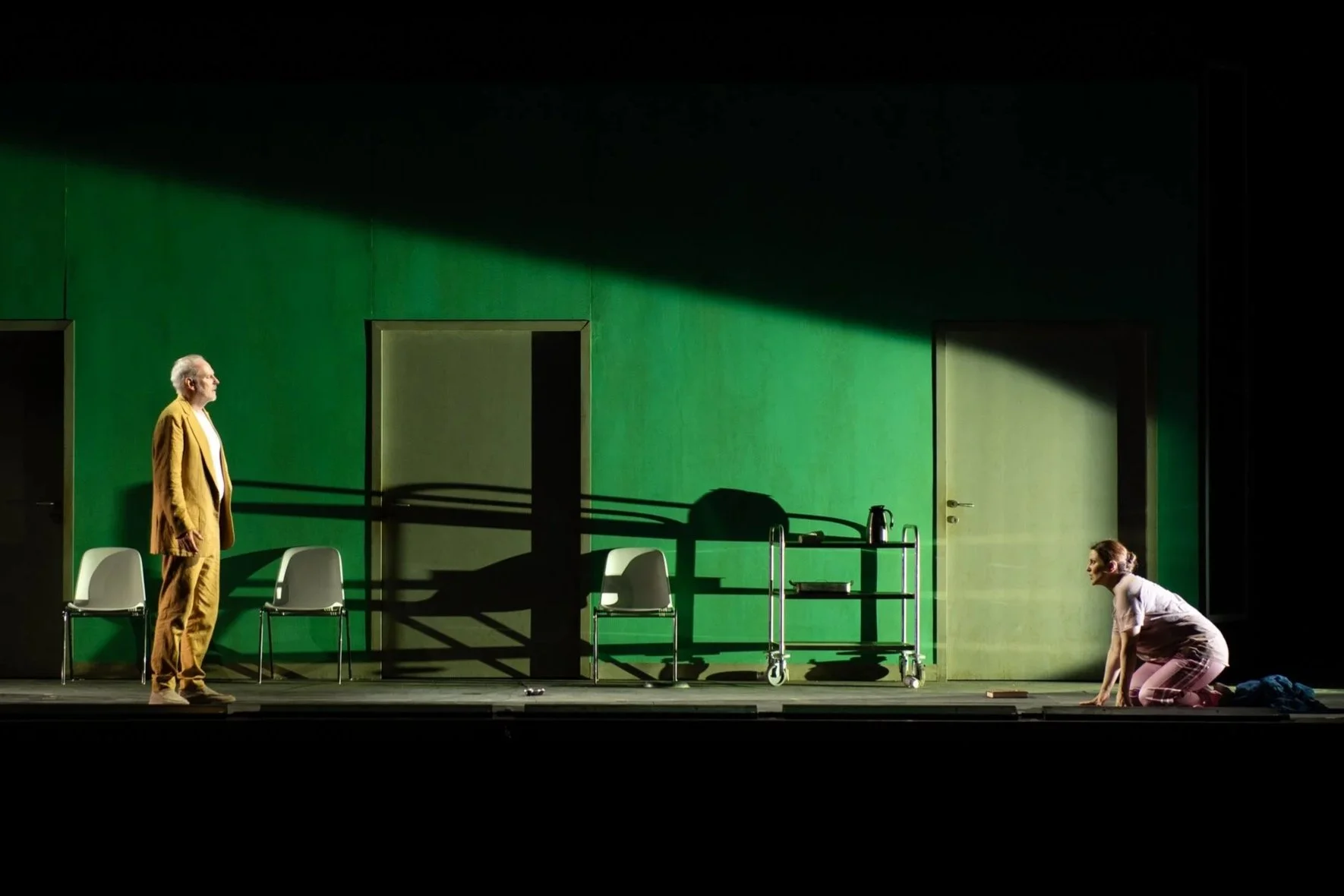
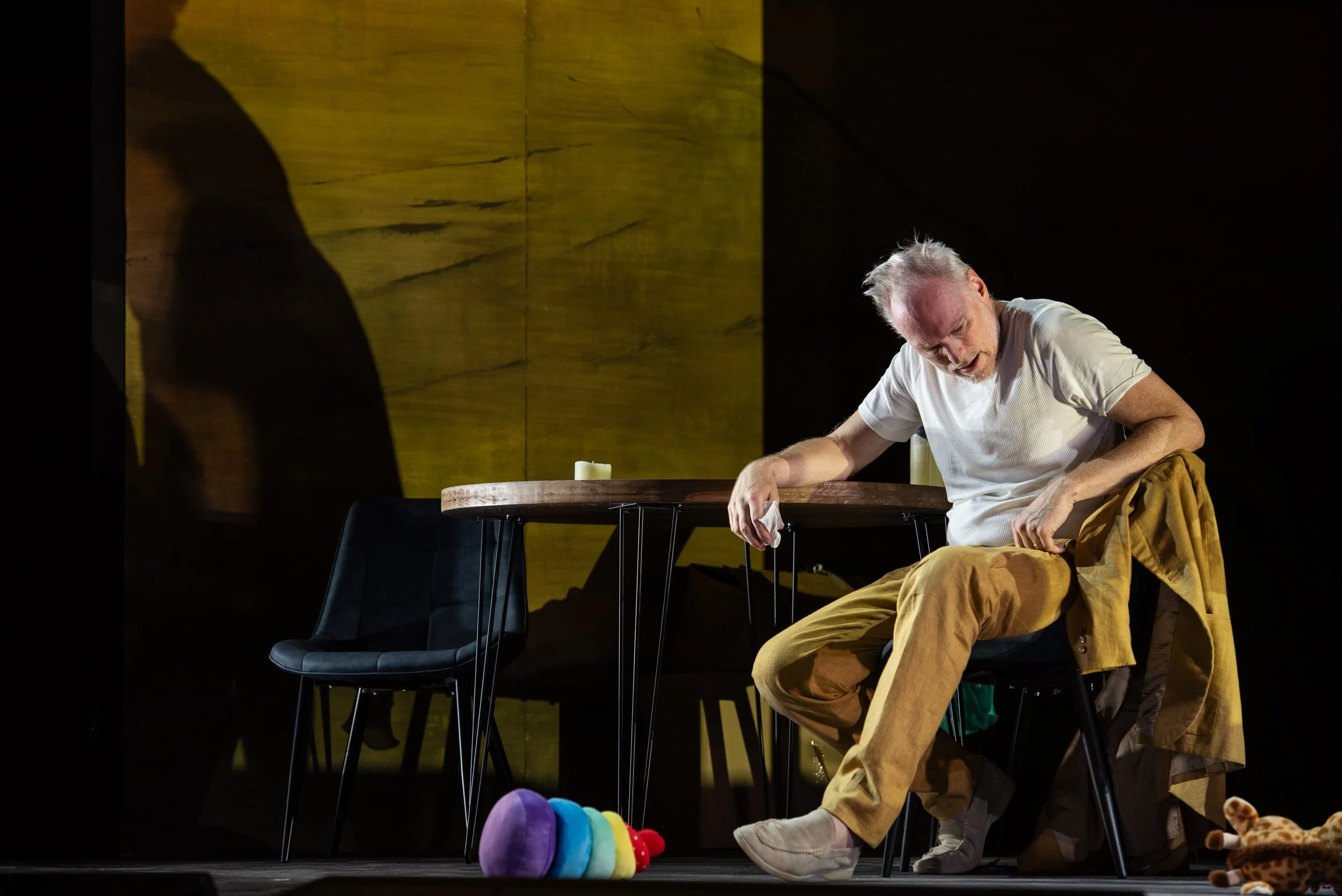
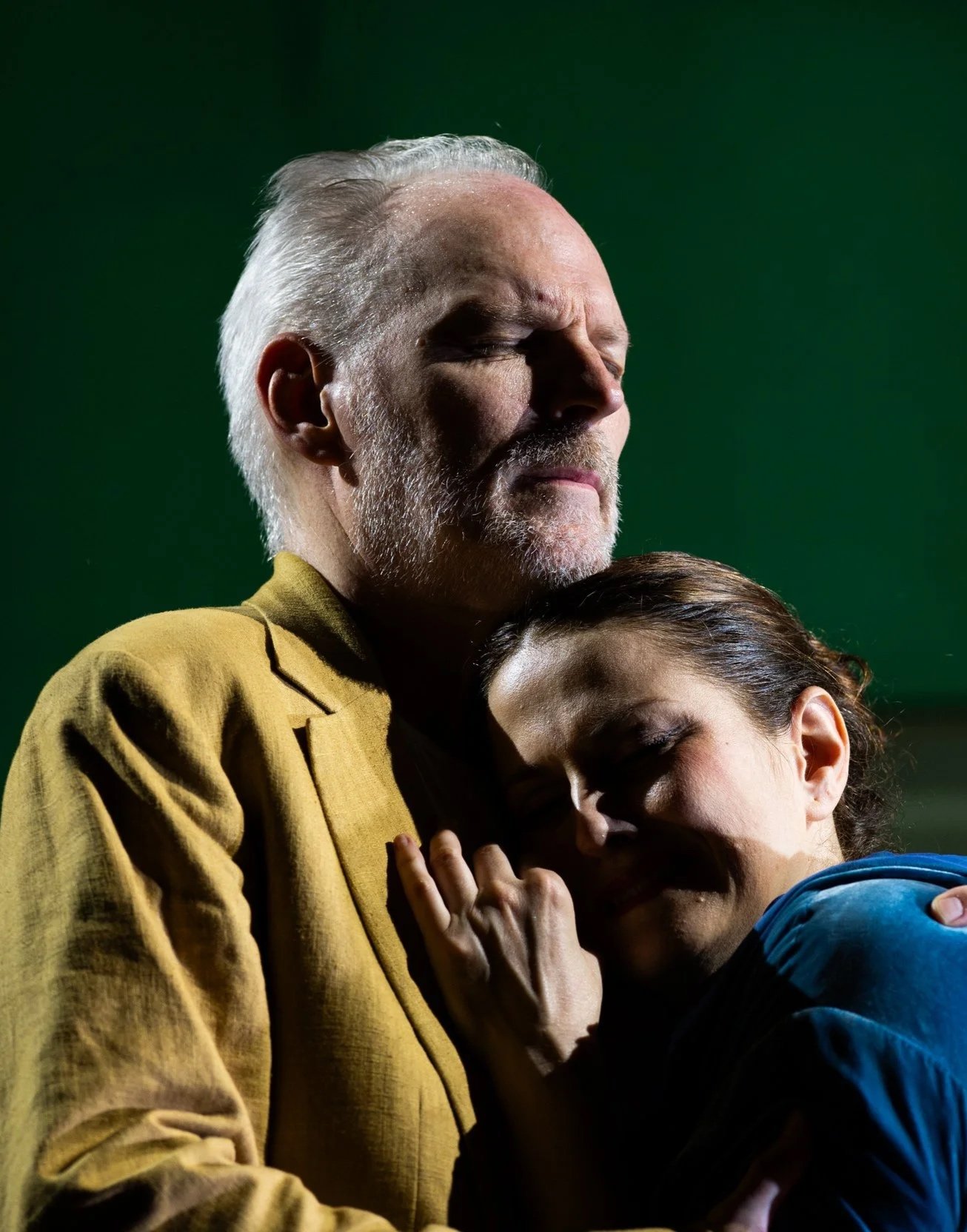
The Secular Resurrezione by Ilaria Lanzino: Applause in Massenzio. Success for the director with Handel at the Caracalla Festival. Ilaria Lanzino hit the mark with her secular interpretation of George Frideric Handel’s oratorio La Resurrezione, presented in staged form. The production opened the opera series of the Caracalla Festival yesterday.
For the young director from Pisa—already recognized abroad, particularly in Germany, for her bold and widely discussed productions—this was a successful Italian debut with a new production by the Teatro dell’Opera di Roma, set in the impressive surroundings of the Basilica of Maxentius.
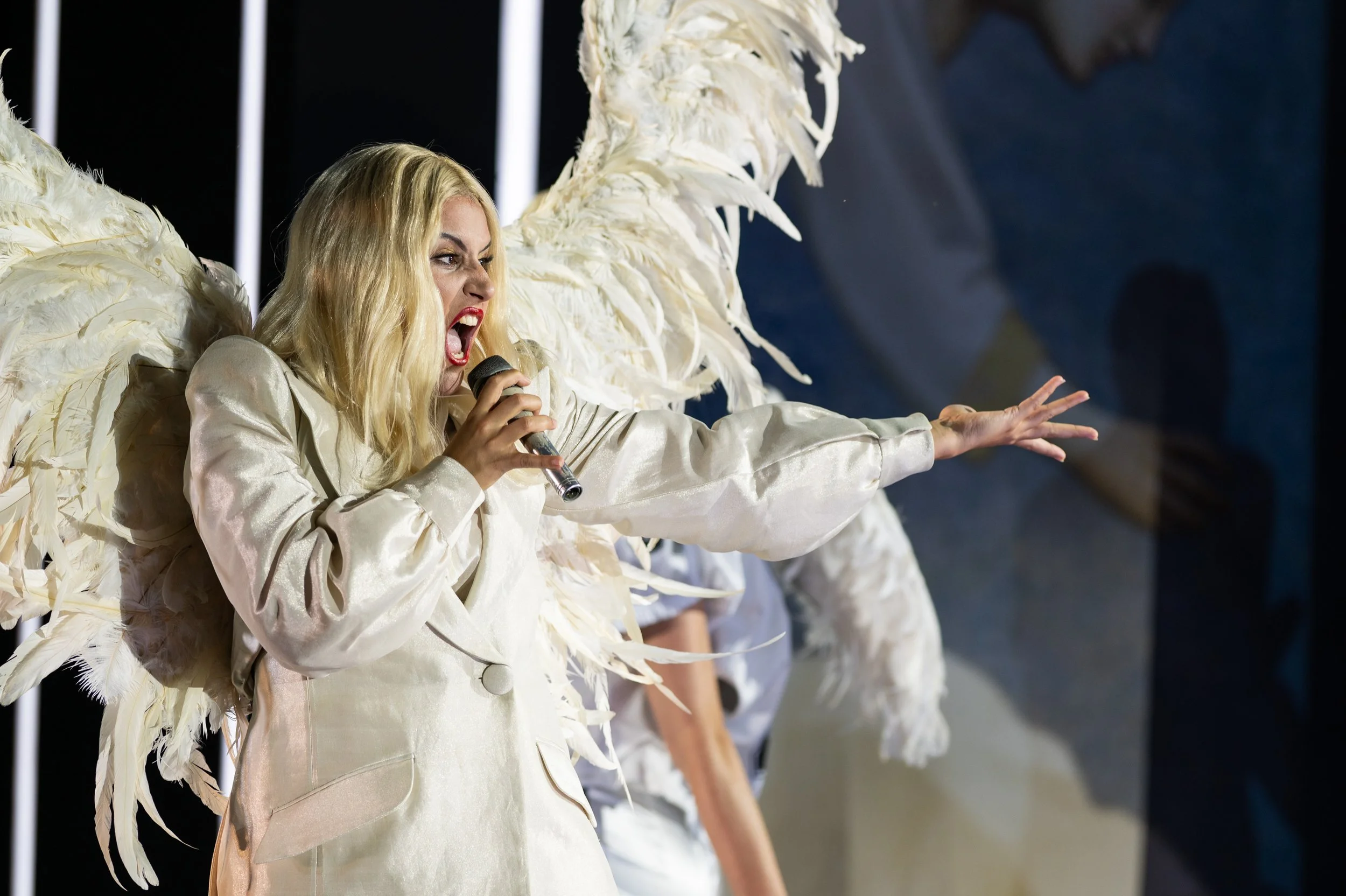
The choice to bring the religious theme of the Baroque masterpiece to the stage as a family’s process of mourning the loss of a child proved both convincing and well-crafted. The story of a contemporary family facing a sudden tragedy was powerfully told. Love and hope are the key to the final Resurrezione, where the triumph of good and the power of forgiveness ultimately include Lucifero—who, in this staging, wears the white wings of an angel.
In the end, there was sustained applause for all, especially for the director.
ANSA
The director's work on Handel is perfectly executed. llaria Lanzino makes her debut with an intense and disturbing Resurrezione di Händel. The production is beautiful, strong, coherent, without any loss of tension, cleverly mounted and superbly acted. Of course, you can agree or disagree. For once, it would be good to separate facts from opinions: That Lanzino knows her job, and does it really well, is a fact; that this performance is stunningly beautiful, my opinion as a critic. But the audience shared it, because unlike usual, the applause doubled when the director appeared. Concluding balance with two pieces of good news: The resurrection has taken place and we have a new director.
Il Foglio
There is nothing scandalous about Ilaria Lanzino’s radical desacralization of the work – on the contrary, it is a choice that reveals a conscious and sensitive exegetical approach. (…) Lanzino shifts the characters from the sacred realm of the past into today’s secular world with undeniable consistency.
One notes her instinct not to settle for the banality of quotation, but to absorb and transform certain cinematic models – starting with Lars von Trier.
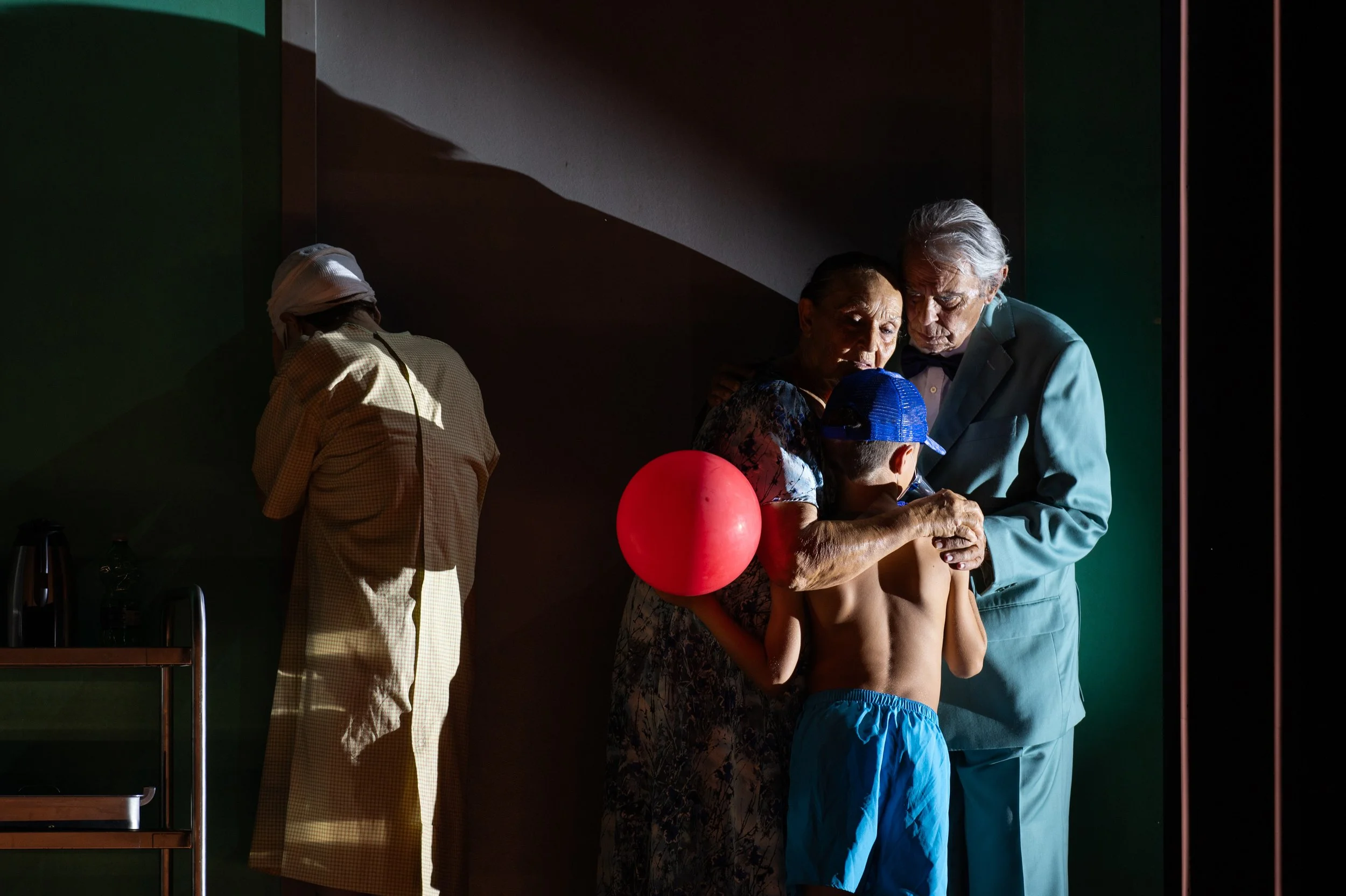
Also distinctly cinematic is her talent for evoking flashbacks (such as the pediatric hospital scene, where a clown entertains ill children – becoming, paradoxically, the only truly Christian note in the entire context), and for unfolding, within a single aria, a succession of different times and spaces.
Above all, what emerges is a brutally earthly dimension.
Bellini News
A bold, but above all deeply moving production.
A show that, at first glance, may appear confusing – because it is unconventional. Some may feel provoked, even offended, to the point of outrage, while others are drawn in. Indeed, certain sulphuric, anti-Christian scenes might shock a portion of the audience: spitting, the violent hurling of objects of all kinds – including the Bible – toward Christ on the cross, accused of inaction; or the inversion of the Christian cross in a rebellious gesture, embracing the diabolical as a reaction to a disappointed faith. (…) What follows is a sequence of heartbreaking moments (…). This is what Ilaria Lanzino has conceived: an intense and, above all, shattering portrayal of a family torn apart by grief – raising the question of how to go on living after such trauma. (…)
If the audience manages to embrace this staging – an intellectual exercise that is not easy – the reward in terms of emotional and aesthetic impact is magnified many times over.
A radical interpretation. Final ovation.
Barock News
Thunderous applause for a secular Resurrezione by Ilaria Lanzino, who plays with many layers and tells the story of a grieving family.
Rai News
An unusual idea that in no way distorts the original. The director from Pisa has earned a reputation as a bold and innovative interpreter of works rooted in tradition. For her Italian debut, Ilaria Lanzino lived up to that reputation. She chose to give La Resurrezione a scenic form by telling the story of a contemporary family plunged into grief by the sudden loss of a son. A tragedy embedded in the life of a family unit, whose members respond in different ways, yet in harmony with the figures of the oratorio. And all of this without in the slightest distorting the text. Ilaria Lanzino’s concept works brilliantly. It is worth emphasizing that this stage production — while fully respecting both the score and the libretto, and visually narrating a parallel story — supports the listening experience through its restrained creativity and brings a renewed, contemporary resonance to the work.
MusicPaper
The scenic reinterpretation of Handel’s La Resurrezione, which opened the Caracalla Festival, stands as a profound re-evaluation of the Baroque masterpiece—made possible by the innovative vision of director Ilaria Lanzino. The decision to shift the sacred narrative into the context of familial grief—focusing on the anguish of a family devastated by the loss of a child—proves both bold and intellectually provocative. It generates a previously unseen emotional resonance with the audience. Lanzino, whose international career is marked by daring and often provocative productions, particularly in Germany, succeeds in bridging the sacred dimension of Handel’s score with the intimate, painful dynamics of a contemporary human tragedy. The monumental setting of the Basilica of Maxentius amplifies the emotional impact of the narrative, creating a charged dialogue between past and present that transcends mere scenic representation.
The ensemble, cohesive and of remarkable interpretative depth, brings the complex characters of the drama to life with great conviction.
CityNews
What could be more tragic than portraying a mother losing her child? Ilaria Lanzino goes straight to the heart of this timeless, universal story, touching its most exposed and human chords. A very successful Italian debut for another “brain drain” talent: very young, from Pisa, already with solid, award-winning experience on major European stages, especially in Germany.
Here, resurrection happens in different ways: for the father, it means starting a new life, bringing another child into the world; for the mother, it means ending her own life—to be reunited through death with the soul of her lost child.
This narrative is beautifully intertwined with Handel’s delicate musical mapping of human emotions.
(Classic Voice)
⸻
The directorial concept is bold, personal, and sincere.
This is a production with a strong, unmistakably individual signature – visually austere, yet rich in symbolism. The effect is not that of mere illustration, but rather of provocation: the oratorio is deliberately deconstructed in order to question its relevance today. The sacred grandeur is intentionally set aside in favor of exposing human vulnerability.
A theatrical work that moves and unsettles – and demonstrates that musical theatre is still very much alive.
Corriere Nazionale
A harmonious and beautiful performance. Lanzino handled the spaces and the interactions between the protagonists very well, with original ideas that made the most of an extraordinary venue. The work was a great success, as it could be enjoyed even by an audience without expert knowledge.
Art in Movement
The Caracalla Festival 2025 opened at the Basilica of Maxentius with Handel’s La Resurrezione, directed by Ilaria Lanzino, to great success. The production stood out with an emotionally powerful interpretation.
Ilaria Lanzino chose a secular approach to tell a story that explores grief and loss through the eyes of a contemporary family. The plot revolves around the death of a child and the parents’ reactions to this tragedy, bringing the religious theme of the Baroque work into a new, immediate, and moving present.
The director managed to create an emotionally dense narrative that invites the audience to reflect on family dynamics and how to cope with pain in difficult times.
The long and enthusiastic applause at the end of the performance showed how much this new interpretation of the work was appreciated by the audience.
Socialmedialife
An intense production that combines historical precision with a contemporary gaze.
Ilaria Lanzino’s direction chose not to simply illustrate the score, but to question it—transforming it into a theatre of thresholds, where the sacred is no longer a dogma but an active void, a space of inquiry.
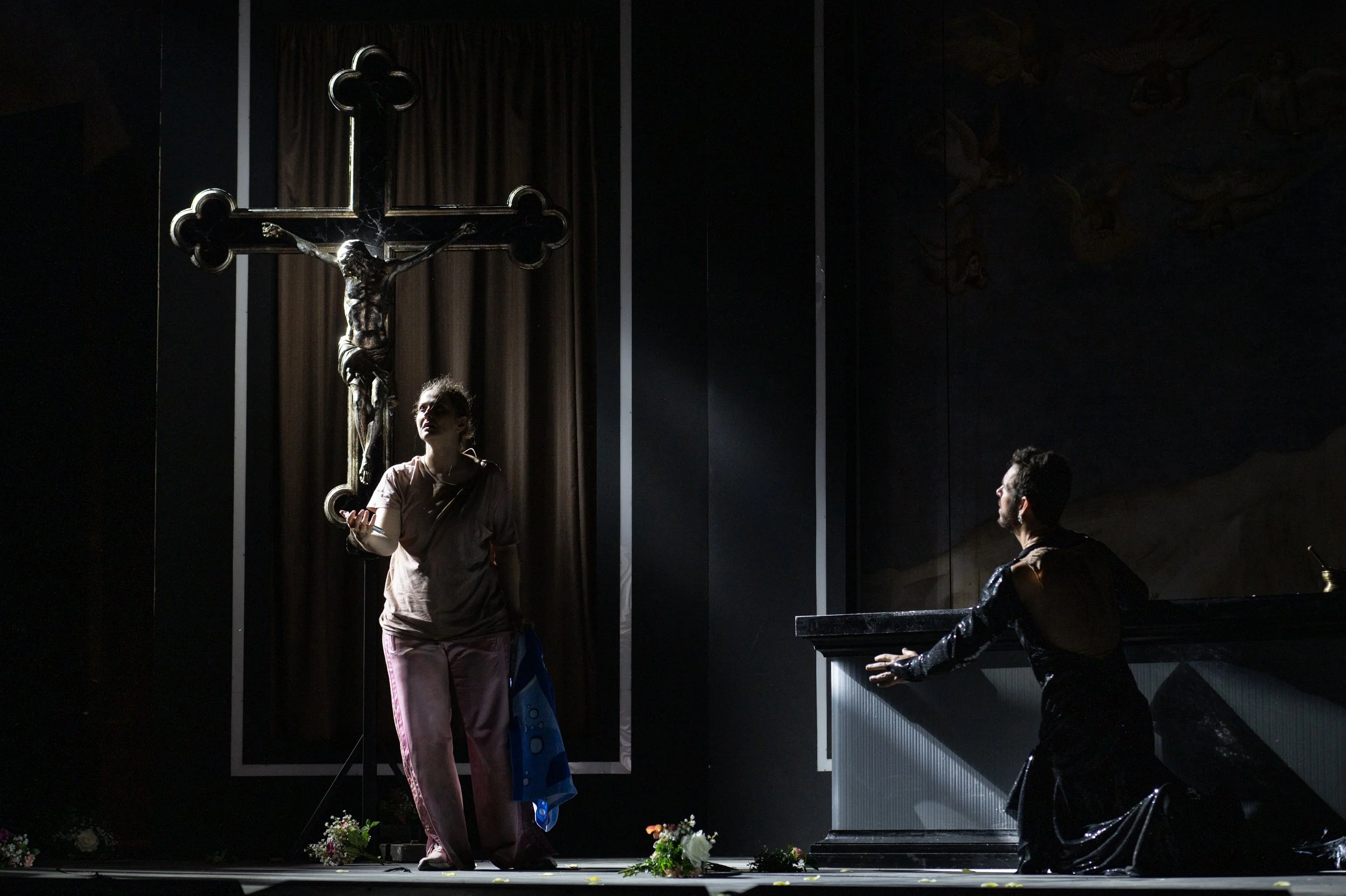
The stage is conceived as a mental and emotional landscape, scattered with symptom-objects—disheveled beds, crucifixes, cradles, overturned chairs—which do not narrate directly but rather suggest, evoking absence more than telling a story.
The visual score unfolds in fragmented tableaux, non-linear sequences, and threshold images that settle into the viewer’s memory like disturbing icons.
The cinematic references—from Lars von Trier to Nanni Moretti, from Wang Xiaoshuai to Felix van Groeningen—are not decorative citations but profound matrices that shape the entire visual structure of the work. A production developed with intelligence and consistency.
This too is theatre: a place of exposure, risk, and ambivalence. Even if some of the director’s choices may appear debatable, what remains is the inner coherence of the concept and the determination of a clear artistic vision. A direction that can divide, irritate, perhaps even overwhelm—but that never seeks to simply please. And that alone is of great value today.
GB-Opera
Innovative staging and direction by Ilaria Lanzino, characterized by strong narrative power and a striking combination of the sacred and the profane.
Città Metropolitana di Roma
Lanzino's is the highly effective idea of transforming the sacred subject into the story of a family of today, mourning the unexpected loss of a child. By setting aside the episode underlying the libretto, the dilemmas of faith when confronted with death are thus transferred to current events. The emotional attachment that is triggered in the spectator - in this unique contemporary declension of the grammar of affections of Baroque theater - is immediate, beginning with the heartbreaking funeral of the child at the beginning of the performance. Bit by bit they relive, through almost cinematic flashbacks, the stages leading up to the death of the child and the deterioration of family relationships resulting from the tragedy;
while at the end, in place of the resurrected Christ, one will see the child arriving on stage walking on his own legs. A radical rewriting (...) in strong conceptual implantation.
ilPunto
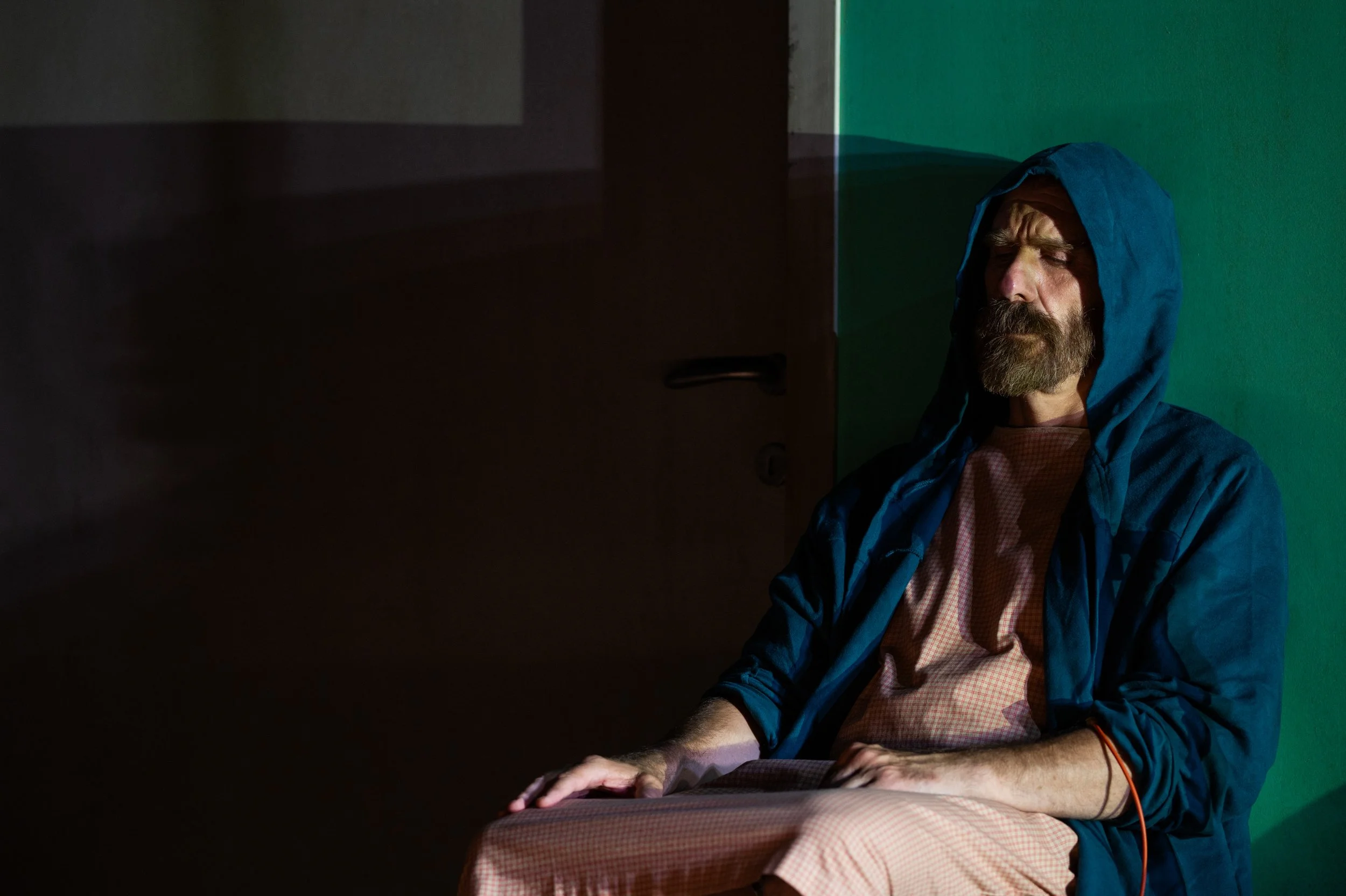
Lanzino develops an original dramaturgy that places the story in a contemporary setting, confronting the audience with humanity’s eternal questions. The death of Christ is replaced by the death of a child, along with the resulting family tragedy. The mother (portrayed in the libretto as Mary Magdalene) falls into an abyss of despair that leads her into alcoholism and eventually to suicide, while the father (actually Saint John) finds comfort in another woman who gives him a new child to fill the void left behind. The initial confrontation between good and evil is embodied by the figure of the Angel, who appears on stage as a kind of rock star, not far from Lady Gaga’s aesthetic, while Lucifer – deprived of his wings, leaving two red scars on his shoulders – becomes a sort of drag queen, complete with feather boa and glittering dress. After the child’s funeral, a rotating stage takes us into the sterile spaces of a hospital. In a kind of cinematic flashback, we are transported to the heart of the tragedy. The child dies despite the doctors’ efforts to save him, and from that moment on everything falls apart. The mother, trapped within the walls of an anonymous apartment, can no longer find her way back to daily life. An attempt at intimacy with her husband fails miserably, and her loss of faith drives her to the peak of despair. The heartbreaking farewell to her child is expressed through objects: stuffed animals packed away in boxes, ritual candles, crucifixes, and prayer books that no longer offer her any comfort. The core idea is that of a humanity without hope, abandoned in an empty universe – the silence of God, as explored in Bergman’s films. Yet, within the folds of the narrative, we also perceive a yearning for transcendence, a glimmer of hope even within this harrowing reality. The staging presents the various scenes like a contemporary Stations of the Cross, with living pictures (tableaux vivants) that suddenly come to life with remarkable dramatic effect. This is a carefully constructed and excellently performed work that is, in some moments, emotionally very moving. Ultimately, it is a production that provokes discussion, divisive but undoubtedly driven by a powerful underlying idea and a remarkable narrative ability.
Drammaturgia
An Intelligent Italian Debut for Ilaria Lanzino
Manuel Brug
There are moments of uproarious comedy, and there are moments of immense tragic intensity—if not outright heartbreak. Few images are more harrowing than that of a mother picking up the toys of her deceased son. The director studied the text perfectly and resolved the conflicts with great intelligence. The provocations that arose were never gratuitous; they made sense within the framework of the dramaturgy. The scenic solutions revealed great talent (…) The direction of the characters was extremely meticulous and brought out the very best in each of the assembled singers, which, in some cases, led to tragic and deeply moving moments.
What is most important, however, is that the dramatic situations not only did not disturb the flow, but elevated the intensity of the music—particularly the sorrowful arias—bringing them to the brink of tears.
Ya nos queda un día menos
Director Ilaria Lanzino’s production departs entirely from the religious subject matter and instead tells a story that, while structurally aligned with the oratorio’s dramaturgy, is entirely new in content. (…) The pain of Magdalene, which in the oratorio may initially seem abstract, becomes tangible and profoundly real through Lanzino’s concept. This is a visually rich, multilayered production, full of subtle references (with set design by Dirk Becker and lighting by Marco Filibeck), creating relatable echoes of everyday life for the audience – while also delivering immediate emotional impact through precise direction and deeply committed performances by the singers. A complete success.
ArtPost
Stage direction: Ilaria Lanzino
Stage design: Dirk Becker
Costume design: Annette Braun
Light Design: Marco Fillibeck
Fotos: Fabrizio Sansoni