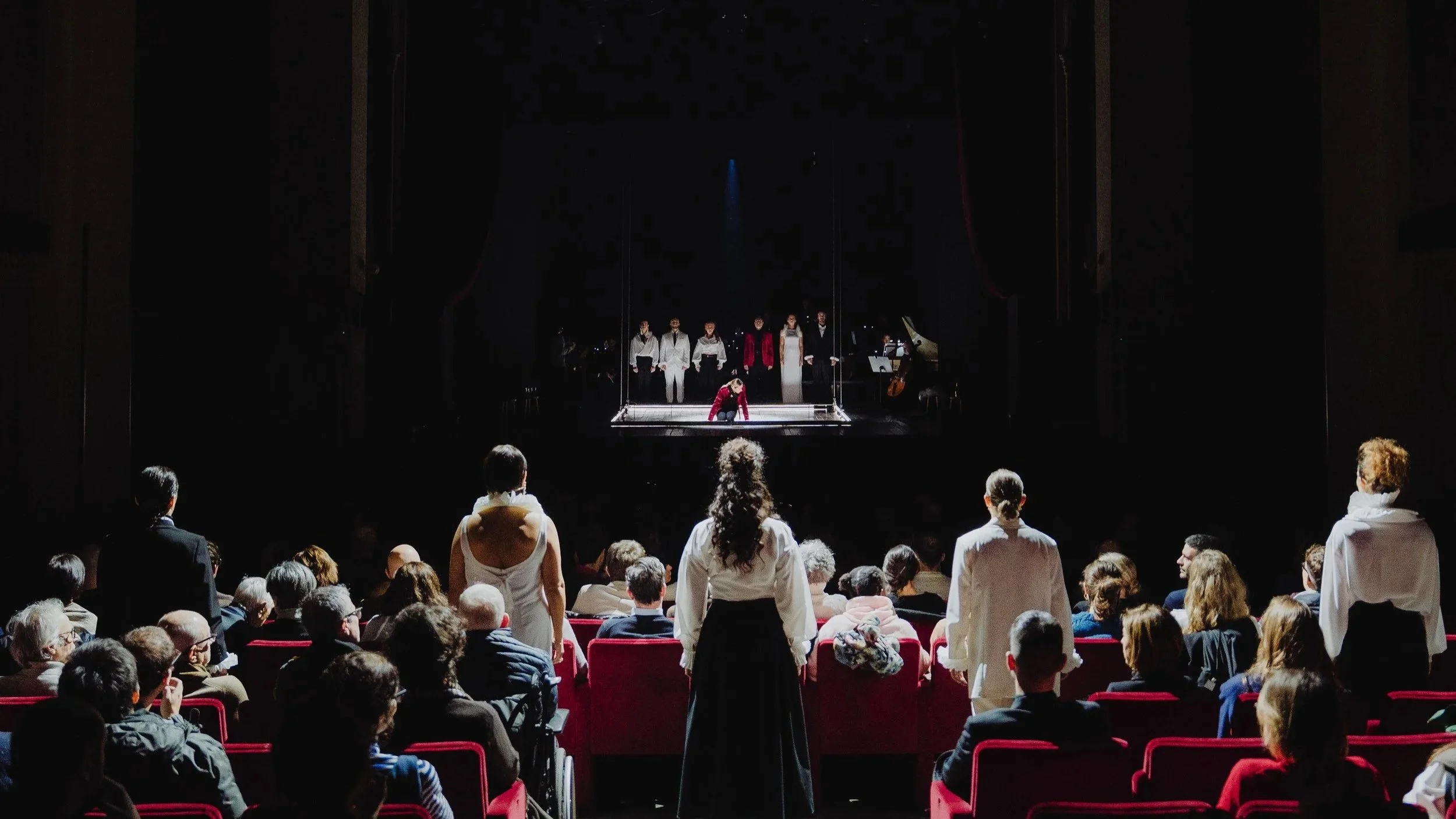
Hamlet
After William Shakespeare
With music by Francesco Gasparini
Teatro delle Vigne
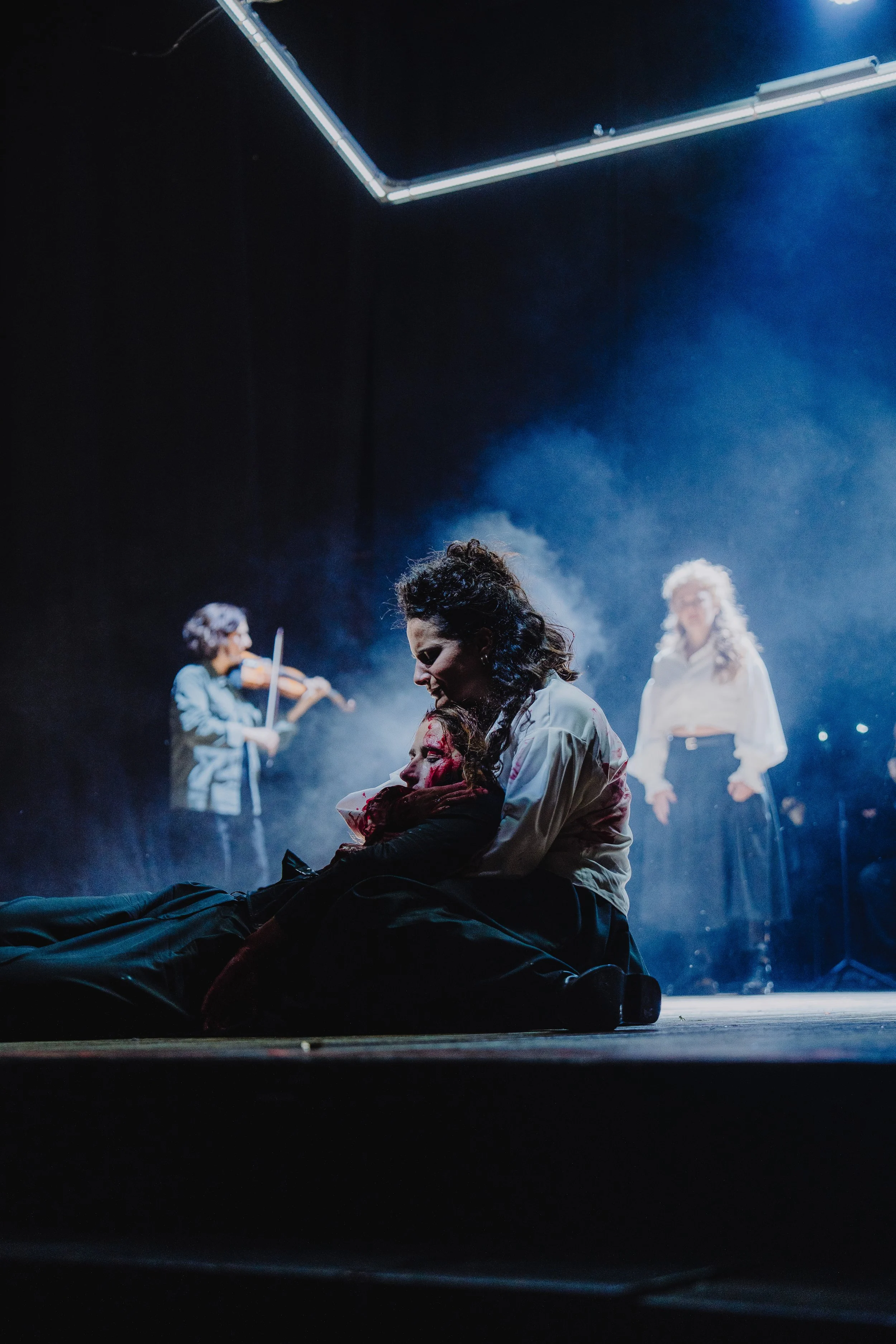
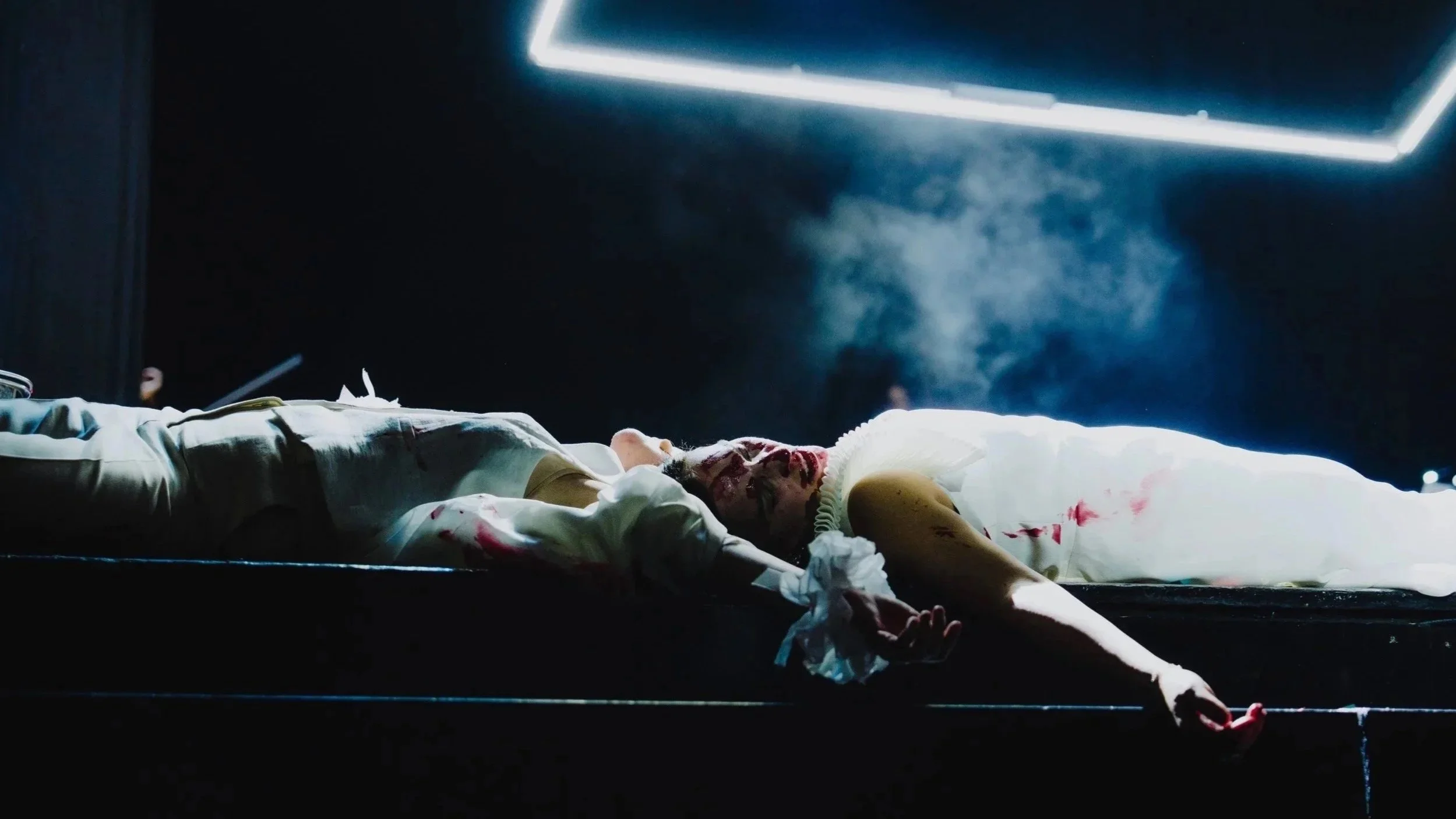
“Two hours of pure theatrical pleasure. That Lanzino is a great director had already been recognized last summer in Rome with her „Resurrezione“; but that this Hamlet would unleash such a powerful and moving impact was, frankly, a surprise. Surprising, too, is the ending: after the great bloodbath has been carried out, only Ophelia remains alive, and it is she who, at the end, recites ‘To be or not to be.’ Ladies and gentlemen: this is theater. And great theater.”
Alberto Mattioli, Il Foglio
“A fully successful experiment, without any doubt – pure theater. Pure theater that slips from one form into another, theater that keeps you glued to your seat for an uninterrupted hour and forty minutes – and not with one of the most easily accessible texts. Ilaria Lanzino, a ‘enfant terrible’ director, a shaker of audiences and critics, a subverter of conventions, as Carlo Gérard would say, has created a production whose technical precision is almost frightening – also thanks to the magnificent actresses. A performance that is harder to describe than to see and understand live, because everything worked as if guided by an expert hand, while the concept – which has shaken more than a few spectators – found a fully convincing realization. One more thing: a brilliant idea, a serious and by no means predictable coup de théâtre, to have part of the legendary monologue ‚to be or not to be‘ spoken by Ophelia – the sole survivor this time of a family tragedy of pure, insatiable madness.”
IlTrilloParlante
“The finale of the performance is completely unexpected, striking, with a reversal of conventions and the highlighting of Ophelia, as well as the other female figures: not by chance, it is exclusively women who perform the male roles. A consciously symbolic choice, meant to shape this new production in depth. A complete success, met with roaring, sustained applause.”
Il Corriere dello Spettacolo
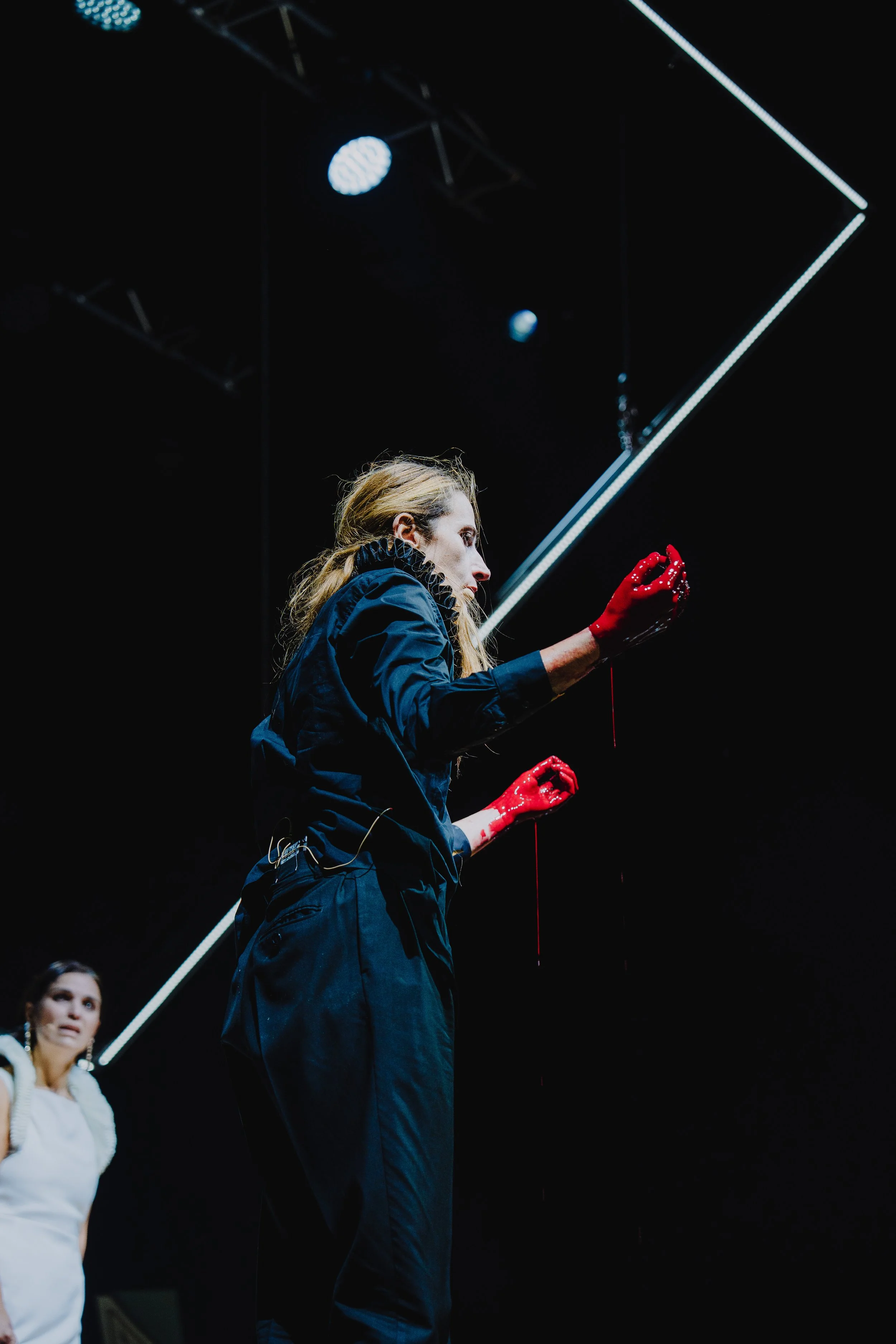
“This Hamlet is a lightning bolt off-axis: Lanzino takes Shakespeare, dismantles him with irony, and reassembles his shadow into an intelligent, mirror-like, and surprisingly modern parody. Here the direction of Ilaria Lanzino (who also adapted the texts) reveals its deepest nature: not mere visual accompaniment, but a true narrative choreography, capable of transforming the work into a living, supple, and strikingly contemporary organism. Ilaria Lanzino’s direction demonstrates a clear awareness: the decision to bring out the grotesque inherent in the text not as a caricatural tint, but as the driving force of a deformed, elastic corporeality, at times even comic, allows the performance to oscillate without ever losing tension. The trajectories of the characters’ movements on stage follow gentle curves, secret diagonals, sudden whirlwinds: movements that recall baroque dance, but reworked like distorted echoes, shadows that lengthen and shorten according to the logic of dreams.
And when the curtain falls, what remains is the feeling of having witnessed a tragedy that does not merely ask to be heard, but quite literally allows itself to be seen dancing. A living, mobile, courageous Hamlet. A small, bizarre masterpiece that clings to you like a restless smile.”
Giornale Della Danza
Stage direction: Ilaria Lanzino
Stage design: Ilaria Lanzino
Costume design: Sara Marcucci
Light Design: Ilaria Lanzino
Fotos: Giordano Mattar